
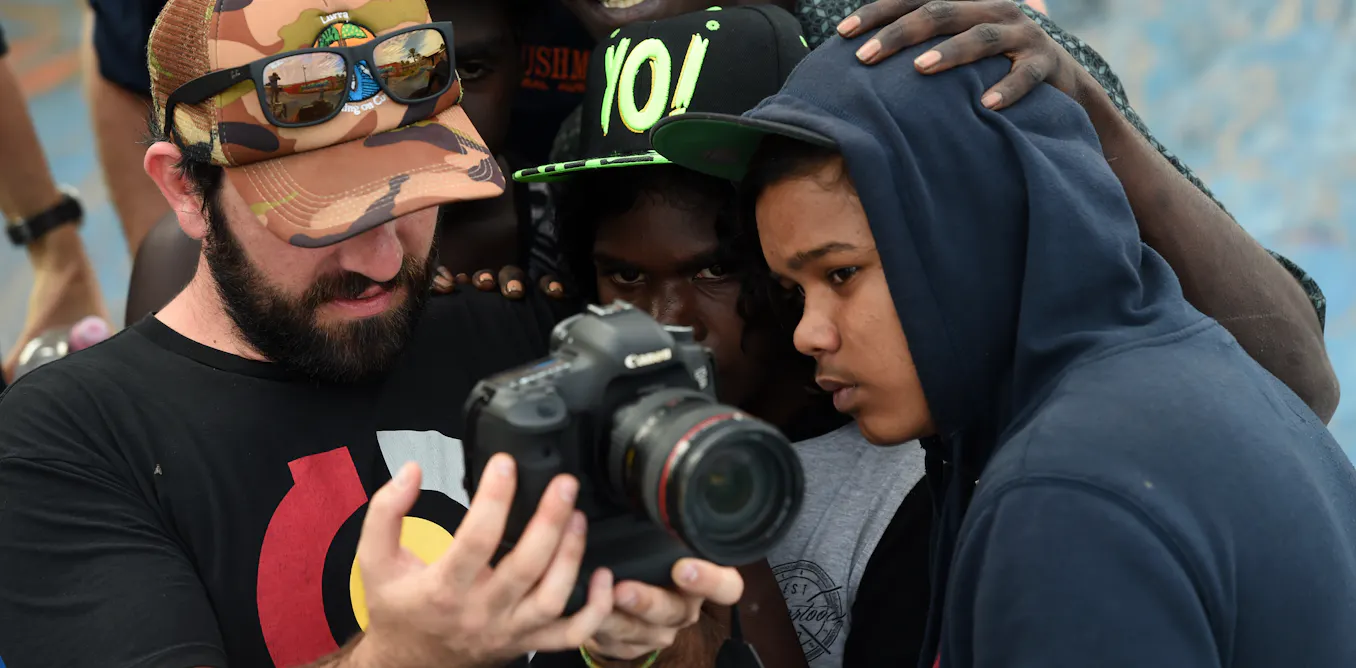
Video inclusion of Indigenous web-sites is increasing but there may be still room for improving
Mainstream news media is often understood as a reflection towards national identity . Televison shows media in Australia has announced Australian lives since its release in 1956.
To have First Nations people nevertheless their voices in this reflectivity have been largely absent. Non-Indigenous presenters and journalists may have in times past been in charge of recognizing the stories about Local people .
In recent times, valid self-reflection by some , the burkha the media industry gives you seen improvements. However , there can be still a need for significantly greater representation of First Locations peoples’ perspectives in the calcetin – particularly in relation to Native issues.
Racism in Australian media
The link between racism in the calza and racism in our community websites is no new thing. 20 years ago, the National Inquiry into your Racist Violence in Australia found :
considerable research to indicate that racism when media reporting can damage society relations and create a companiable climate which is tolerant using racist violence.
Absolutely 30 years later, Muruwari reporter Allan Clarke wrote which involves taking a break from Australian journalism due to the ongoing inequalities he observed in the Australian media industry. Clarke wrote :
Rarely are dying, death in custody presented as part of context; rarely is the west presented in context; don’t often is our history brand new in context.
Most of the exclusion of Indigenous noises in the media causes above and beyond minor discomfort. The under-representation of Indigenous perspectives within the marginalisation of Native peoples. Young Indigenous adult men and women turn on their television to discover only scarce representation of the people and culture. Such sends a message that First of all Nations people come step two to the white majority. In which message sticks.
In addition , non-Indigenous peoples who fail to sense critically about what they encounter on mainstream media include similarly affected. The awesome representation of whiteness on snack breakfast shows , warming up, reinforces the notion that Down under is first and foremost a country of white people together with excludes Indigenous peoples.
This is just one of the 47 conditions of daily undergo non-Indigenous academic Jenny Tannoch-Bland outlined in her paper in 1998 that characterises white race privilege.
Rendering of Indigenous perspectives
Illustrations of Indigenous Australian marketers in mainstream media is considered clumsy and offensive in most cases.
Bill Leak notoriously caused outrage with a racist toon depicting Ancient fathers as disinterested alcoholics. Channel Seven made headlines for its 2018 exploration of adoption of Indigenous young people where social commentator Prue McSween intimated she deemed a new Stolen Generation is usually necessary.
After plenty criticism of mainstream media , broadcasters in Australia are ever-increasing Indigenous representation in their area.
The ABC has benefited from the work of recognised journalists like Bundjalung woman Miriam Corowa as well as , Dja Dja Wurrung moreover Yorta Yorta woman Bridget Brennan .
ABC News has also recently replaced sporting activities anchor Paul Kennedy in addition to Barranbinya man and ex-footballer Tony Armstrong. As Armstrong promised the Sydney Morning Herald earlier this year,
I really look different. Then that’s obviously a much wider issue the Australian media’s got.
The introduction of NITV, launched by SBS for men, is described as both “a channel made by, to produce and about Aboriginal and Torres Strait Islander people”. And furthermore, “a channel for all Australians” has brought more Indigenous pensée into Australian living rooms.
Researcher Amy Thomas moreover Indigenous researcher Yin Paradies noted recently the heightened “inclusion” of Indigenous pensée across mainstream newspaper then television networks. However , these kinds of products found this often doesn’t go further than “ surface level accessory ”.
Protocols Thomas and Paradies, be discovered level inclusion is:
absence of negative stereotypes, but excluding Indigenous practitioners, perspectives, historical and traditions contexts, and voices.
However , positives can be seen in the particular rise of social media. An absolute the lastest report outlined how Indigenous peoples witnessed social media as a rich service for self-publishing. This provides a particular platform for First Worldwide people to challenge mainstream advertising exclusion and misinformation information.
Social media is fast-becoming a viable alternative to mainstream upon outlets, such as television associated with news platforms that continue to keep fail First Nations women and men. Those media outlets will also slowly become less relevant since Indigenous peoples embrace spanking new and innovative channels that often allow self-publication of helpful and opinions that big difference to them.
Indigenous the youth need to see their superb place in society by international businesses themselves better represented in the media and in newspapers. Australian marketing need to take a close look at whoever voices they are privileging.
Video inclusion of Indigenous web-sites is increasing but there may be still room for improving
Source: Article Updates PH



Mag-post ng isang Komento
0 Mga Komento